
As we welcomed the new year, the Science of Well-Being lessons continued the spirit of…

Beginning the Science of Well-being for a New School Year
1.
Beginning the Science of Well-being for a New School Year
Welcome to a new school year! I am full of gratitude for the opportunity to be returning to Villa on a monthly basis this year by sharing my expertise and passion in applied positive psychology to equip your girls with tools and strategies to flourish in and out of school.
Each month, your daughter will engage in “Science of Wellbeing” lessons rooted in Positive Psychology and aligned with social-emotional learning (SEL) competencies and skills. The lessons will be designed to help her understand herself and others, manage emotions, and develop lifelong habits for flourishing.
While each grade level will have specific personalized lessons throughout the year, grades K-2 will primarily focus on identifying and managing emotions within themselves while grades 3-5 will shift to an outward concentration on communication and collaboration with others. Girls in middle school will dig deeper into applying the five pillars of positive psychology to support themselves in areas such as leadership, resiliency, and overall happiness.
Below you’ll find a summary of what was covered in each grade level during their introductory September lessons, along with tips for supporting this growth at home.
Kindergarten
Focus: Emotions and the Brain
Lesson Summary: Learned that all emotions are important. Read aloud Fiona Flamingo and girls completed a coloring activity to reinforce that all feelings matter. Modeled and explored Dr. Dan Siegel’s Hand Model of the Brain: the Wise Owl (prefrontal cortex) is used for learning and making decisions and the Guard Dog (amygdala) is responsible for emotions and protecting us, the guard dog will “bark” (strong emotions felt) if danger is detected. Practiced calming techniques through mindful listening, breathing, and grounding touches.
Skills Highlighted: Self-Awareness, Self-Management
Try it at Home: Ask your daughter to show you the Wise Owl & Guard Dog handout and practice “quieting the barking dog” with deep breaths.
For Parents: Dr. Dan Siegel’s book The Whole-Brain Child provides simple strategies for helping children manage big emotions. Try modeling your own “Wise Owl moments” by naming your feelings out loud and showing your daughter how you calm yourself.
Grade 1
Focus: Happiness & Emotional Reframing
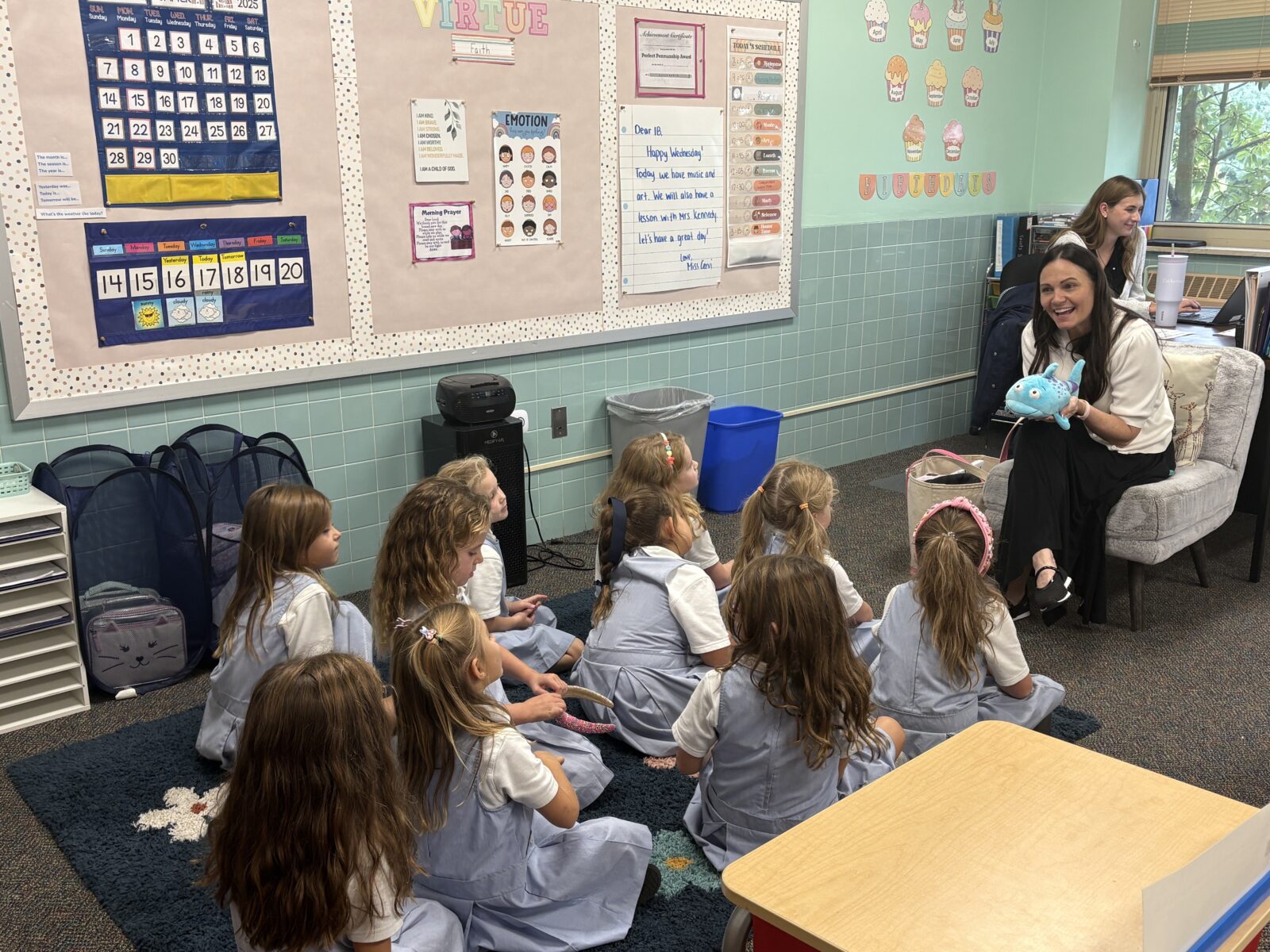
Lesson Summary: Reviewed content from last year. Read aloud The Pout-Pout Fish to explore how shifting thoughts can change feelings and learned the power of reframing negative thoughts into more positive ones. Students drew what makes them smile in the first page of their year long Sea Book.
Skills Highlighted: Self-Awareness, Emotional Agency
Try it at Home: Ask your daughter to share something that brings a smile to her face. Encourage her to “flip the script” when she’s feeling pouty.
For Parents: Barbara Fredrickson’s research on positive emotions (Positivity) shows that noticing joy builds resilience. Try ending your day with a quick “three good things” reflection.
Grade 2
Focus: Character Strengths & Self-Efficacy
Lesson Summary: After reviewing content from last year, read aloud Claris: The Chicest Mouse in Paris, and learned “compassion is always in style.” The girls reflected on some of their own interests and strengths and learned that believing in themselves helps them face challenges with confidence. Completed the first page of their “passport” about strengths.
Skills Highlighted: Self-Awareness, Self-Efficacy
Try it at Home: Ask your daughter to share one of her interests or strengths and recognize when you witness her engaged in it during the week.
For Parents: In Grit, Dr. Angela Duckworth’s research shows self-efficacy drives perseverance. Try identifying one of your own strengths and intentionally apply it in a small challenge this week.
Grade 3
Focus: Cognitive Awareness & Compassion
Lesson Summary: After a reading of Taco Falls Apart, students reflected on the power of both their thoughts and words on themselves and others. They discussed being caring and compassionate friends who encourage each other like Nacho and the other ingredients did in the story when Taco was having a hard time keeping everything together. The girls identified positive language they can use to speak to themselves or to friends.
Skills Highlighted: Social Awareness, Relationship Skills
Try it at Home: Ask your daughter to share a self-talk message she finds helpful or create a new one together for the week ahead.
For Parents: Kristin Neff’s research on self-compassion shows that kind self-talk reduces stress. Practice reframing one critical thought with a kinder message toward yourself.
Grade 4
Focus: Belonging & Compassion
Lesson Summary: Using the book A Little SPOT of Belonging, students discussed authenticity, inclusion, and belonging. They girls explored how being true to themselves allows them to help others feel included and came up with one idea of how they can make someone feel a sense of belonging.
Skills Highlighted: Social Awareness, Relationship Skills
Try it at Home: Ask your daughter to share her idea of how to include someone at school.
For Parents: Brené Brown’s Braving the Wilderness emphasizes authentic belonging. This week, notice a moment when you can create belonging for someone else at work, within your family, or community.
Grade 5
Focus: Mindfulness & Perspective-Taking
Lesson Summary: Using Kobi Yamada’s Noticing, students explored the importance of slowing down, observing the small details, and acknowledging different perspectives. The girls created keyrings with colored beads and a heart bead to serve as a mindfulness reminder to look for the good, focus on what feels right in their heart, and to look for little details because they can add up to strengthen compassion and appreciation.
Skills Highlighted: Social Awareness, Mindfulness
Try it at Home: Ask your daughter to show you her keyring and share a little detail of something good she noticed today in someone or something.
For Parents: Dr. Rick Hanson’s Hardwiring Happiness shows that savoring positive moments rewires the brain for joy. Try pausing 10 seconds to fully notice and savor something uplifting today.
Middle School (Grades 6-8)
Focus: The PERMA Model of Wellbeing
Lesson Summary: Introduction to Positive Psychology and Dr. Martin Seligman’s PERMA pillars of wellbeing-Positive Emotions, Engagement, Relationships, Meaning, and Accomplishment. Created PERMA keyrings to serve as a daily reminder of the ingredients to living a good life.
Skills Highlighted: Self-Awareness, Responsible Decision-Making
Try it at Home: Ask your daughter to pick one PERMA letter to focus on this week (for example- “R” for relationships and send a kind message to a friend).
For Parents: In Flourish, Dr. Marty Seligman explains that practicing PERMA skills increases overall life satisfaction. Begin your day with a personal primer such as listening to uplifting music or writing three good things.
Through the monthly lessons, students will be building habits of self-awareness, strengthening resilience, building compassion, and experiencing joy that will serve them for a lifetime. I am looking forward to the year ahead together, may these monthly recaps provide you with the language to reinforce these practices at home.
With joy and gratitude,
Sheila Kennedy, MAPP

Related Posts
