
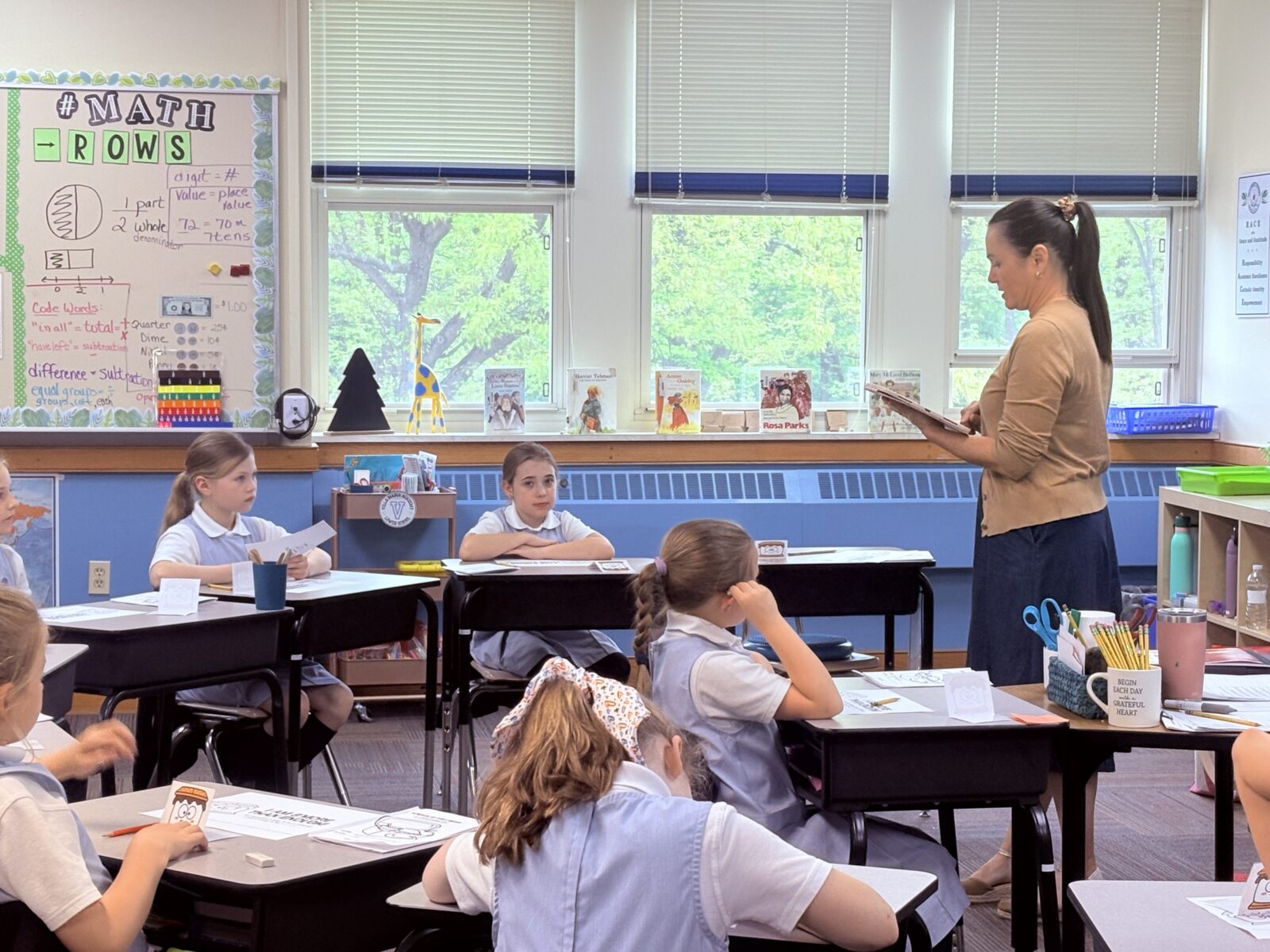
The Science of Well-Being lessons continued this month with Mrs. Kennedy focusing on the power…


The Science of Well-Being Lessons – April
As April came to an end, so did the Science of Well-Being lessons for the school year. During the final set of classes, students were invited to reflect on some of life’s most meaningful questions:
- What gives a person value?
- How do we treat ourselves and others with compassion?
- What helps us grow, persevere, and achieve our goals?
Across all grade levels, students explored the powerful connection between self-worth, compassion, mindset, and achievement through stories, discussion, reflection, and hands-on activities rooted in positive psychology research and social-emotional learning.
Primary classes K-2: Worth & Value
Girls in kindergarten through second grade explored the foundational idea that every person has inherent worth and value simply because of who they are, not because of appearance, achievements, or comparison to others.
Research from Dr. Kristin Neff and Dr. Martin Seligman highlights that children who develop a healthy sense of self-worth are more likely to show resilience, confidence, compassion, and courage throughout life.
Kindergarten: Self-Worth
Read-Aloud: A Penny’s Worth by Kimberly Wilson
Kindergarteners compared two pennies (one shiny and new, the other worn and scratched) and quickly realized both held the same value despite their differences in appearance.
After reading A Penny’s Worth, students discussed how every person is valuable and special regardless of what they look like or what they can or cannot do. The girls reflected on how comparison can make us question our worth and were reminded that each of them is deeply loved and uniquely created by God.
The lesson concluded with the girls making wishes on their pennies and affirming the truth that they are valuable exactly as they are.
1st Grade: Valuing What We Already Have
Read-Aloud: A Dollar’s Grand Dream by Kimberly Wilson
First graders revisited earlier lessons on worry and gratitude while exploring the message “be careful what you wish for and appreciate what you already have.”
The girls discussed how gratitude helps them notice abundance rather than constantly feeling they need “more” to be happy. Connections were also made to the importance of reflection, simplicity, and appreciation.
The girls completed a gratitude activity on their own personalized dollar bills, identifying the people and experiences they value most.
2nd Grade: True Value & Self-Worth
Read-Aloud: Claris: The Chicest Mouse in Paris, Dazzling Diamond Egg by Megan Hess
Second graders explored the difference between monetary value, sentimental value, and the value we offer others through our character and actions.
Students reflected on how self-worth influences decision-making, confidence, self-talk, and resilience when mistakes happen. They discussed outside influences that can affect how they view themselves (including comparison, opinions of others, and personal experiences) and practiced recognizing more helpful and compassionate ways of thinking.
Through discussion and reflection, students strengthened their understanding that their value comes from who they are, including their actions of being a true friend and helping others, and not what they achieve or possess.
Parent Well-Being Tip
Practice Self-Compassion.
Children learn how to speak to themselves by listening to how adults speak to themselves. Modeling self-kindness after mistakes helps children develop resilience and confidence.
Try This: Replace self-criticism with the question: “What would I say to a friend in this situation?”
Intermediate classes 3-5: Compassion
Girls in grades 3-5 explored the theme of compassion; toward themselves, toward others, and within relationships. Lessons emphasized that compassion involves both empathy and action.
3rd Grade: Self-Compassion
Read-Aloud: S’more Is Enough by Brenda S. Miles
Third graders explored the difference between self-worth and self-doubt while learning how comparison can negatively affect happiness.
The girls practiced recognizing helpful versus hurtful self-talk and learned that self-compassion means treating themselves with the same kindness they would offer a friend. Through these scenarios, the girls explored how having a growth mindset and encouragement support resilience. The lesson concluded with an emphasis on the message of “I am s’more than enough!”
4th Grade: Compassion & Forgiveness
Read-Aloud: The Great Caper Caper by Josh Funk
Fourth graders built upon earlier lessons about tone of voice, empathy, perspective taking, and forgiveness. The girls explored how compassion can strengthen relationships even after conflict or hurt feelings.
Activities reinforced the idea that compassion includes understanding another person’s feelings and choosing actions that support healing, communication, and connection.
5th Grade: Compassion in Action
Fifth graders reflected on the many positive psychology themes explored throughout the year, including noticing, gratitude, perspective taking, celebration, and courage. While it wasn’t read aloud, Kobi Yamada’s Caring served as a guide throughout the lesson.
Through discussion, a movie clip, and an analogy to the “Rose, Thorn, and Bud” check-in activity, students examined how compassion can positively impact both themselves and others. As a cumulative application of the year’s well-being skills learned, the lesson concluded with a “Ping Pong” reflection/sharing activity for the girls to engage in with each other.
Parent Well-Being Tip
Model Compassion Toward Yourself and Others.
Children are more likely to practice compassion when they see adults balancing accountability with kindness.
Try This: At the end of the day, reflect on one thing you handled well and one way you showed care to someone else.
Middle School 6-8: Achievement
Middle school students concluded their exploration of the PERMA model by focusing on the final pillar of Achievement and how goal-setting can contribute to overall well-being.
“If you focus on results you’ll never change. If you focus on change, you’ll get results.” Together, students explored how achievement is not simply about outcomes, but about growth, reflection, and resilience throughout the process.
Achievement
Students examined the connection between achievement and many other constructs such as hope, motivation, goal setting, visualization, grit, perseverance, healthy habits and routines.
Through a “30 circle goal-setting challenge,” the girls experienced and explored factors that help or hinder success, including stress, time constraints, collaboration, and planning for potential obstacles.
The WOOP Model & Future Goals
Students analyzed goal-setting scenarios and practiced using the WOOP Model:
- W – Wish
- O – Outcome
- O – Obstacle
- P – Plan
The lesson concluded with a visualization exercise in which the girls wrote letters to their future selves about goals they hope to accomplish by the end of the year.
Parent Well-Being Tip
Focus on Progress, Not Perfection.
Achievement grows through small, consistent steps and planning for obstacles; not flawless performance.
Try This: At the end of each week, ask yourself:
“What progress did I make?” rather than “Did I do everything perfectly?” And “What obstacles got in the way? How can I plan, and what can I do, in the future to handle them?
A Final Note of Gratitude
As April sessions concluded my Science of Well-Being lessons of the school year, I want to extend my sincere gratitude to the Villa community for welcoming these lessons and conversations about well-being, character, relationships, and growth into your daughters’ lives throughout the year.
One of the greatest joys each month has been spending time with your girls; watching them reflect thoughtfully, encourage one another, grow in confidence, and practice the skills that help humans flourish both inside and outside the classroom.
Thank you for your continued support. Wishing your family a joyful end to the school year, a restful summer break, and many meaningful moments of connection, joy, celebration, and well-being in the months ahead.

Related Posts

